Wood-Frame vs. Masonry vs. Steel: How Construction Type Affects Insurance
Your home's construction type can change your insurance costs by 15–30% and affects both premiums and coverage limits. Here's what each type costs to rebuild and insure.
Quick Answer
Wood-frame homes are the cheapest to rebuild ($185/sq ft nationally) and typically have lower fire-resistance ratings, which affects premiums in some markets. Masonry and steel-frame homes cost 13–21% more to rebuild but may qualify for lower fire-related surcharges. Your construction type directly shapes your replacement cost, and therefore your dwelling coverage limit.
Why Construction Type Is a Critical Insurance Variable
When you apply for homeowners insurance, one of the first questions on the application is your home's construction type. It's not just administrative detail. It affects two things directly: your replacement cost estimate (which sets your dwelling limit) and your premium rate (which determines what you pay each month).
Getting this wrong in either direction causes problems. Listing wood-frame when you actually have a masonry home means your replacement cost estimate is 13% low and your dwelling limit is inadequate. Listing masonry when you have wood-frame construction means you're paying premiums on inflated coverage.
This guide breaks down each construction type, what it costs to rebuild, how it affects insurance premiums, and how to identify which type you have.
Wood Frame: The American Standard
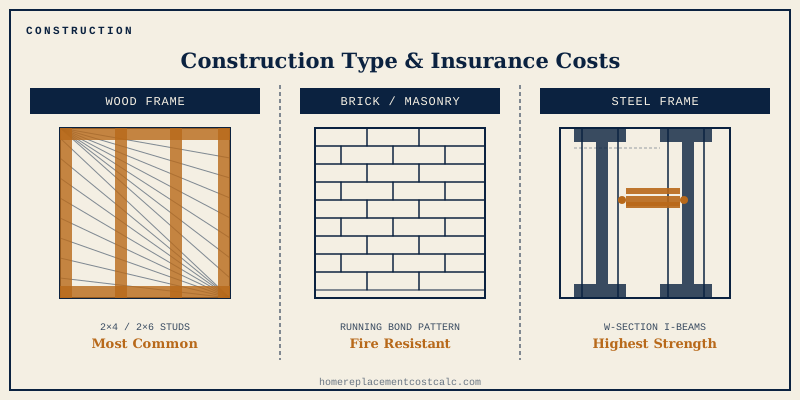
Wood-frame construction is used in approximately 90% of American single-family homes built since 1950. The structural system uses 2×4 or 2×6 dimensional lumber studs, engineered lumber beams, and oriented strand board (OSB) or plywood sheathing.
Replacement cost: $185/sq ft (2026 national average, standard quality)
Fire resistance: Wood frame is combustible, meaning it can sustain structural damage in a fire. Insurance carriers rate wood-frame homes as ISO Construction Class 1 (frame), typically the highest-risk class for fire-related claims. In wildfire-prone areas, this can add a significant surcharge.
Pros for insurance:
- —Lowest rebuild cost = lower dwelling coverage premium on that basis
- —Widely available contractor pool keeps post-loss rebuild times shorter
- —Easiest and fastest to repair after partial damage
Cons for insurance:
- —Higher fire risk rating can increase premiums in fire-prone zones
- —More susceptible to termite damage (often excluded from standard policies)
How to identify: Look at any framing in your garage, basement, or crawl space. You'll see dimensional lumber studs spaced 16" or 24" apart.
To estimate your replacement cost for a wood-frame home, use our home replacement cost calculator with the Wood Frame selection.
Masonry: Brick, Block, and Concrete
Masonry construction uses load-bearing concrete masonry units (CMU block), brick veneer over wood frame, or solid brick throughout. True masonry, where the brick or block carries the structural load, is more common in the mid-Atlantic states, older Northeastern cities, and parts of the South.
Important distinction: Many homes described as "brick" are actually wood-frame homes with a non-structural brick veneer attached to the outside. These are classified as wood-frame for insurance purposes, not masonry. True masonry requires that the brick or block walls themselves carry the structural load.
Replacement cost: $210/sq ft (2026 national average, standard quality), a 13.5% premium over wood frame
Fire resistance: CMU block and solid brick are non-combustible and can contain fire spread more effectively. Many carriers rate true masonry homes as ISO Construction Class 5 or 6, which can reduce fire-related premiums by 5–15% compared to wood frame.
Pros for insurance:
- —Better fire containment, especially for attached or semi-detached homes
- —More resistant to wind damage in many cases
- —Can be rated lower risk in fire-prone markets
Cons for insurance:
- —Higher replacement cost = higher dwelling coverage limit needed
- —Skilled masons are harder to find after a major regional disaster, potentially extending rebuild times
- —Mortar joints require specialized repair after earthquake or settling damage
How to identify: Check whether your exterior walls feel solid when tapped (no hollow sound), and whether your basement or garage shows concrete block or brick wall construction rather than wood studs.
Steel Frame: Strength and Cost
Steel-frame homes use light-gauge cold-formed steel studs instead of wood framing. They're uncommon in standard residential construction but more prevalent in custom luxury homes, high-wind coastal zones (Florida, Gulf Coast), and some parts of the Mountain West.
Replacement cost: $225/sq ft (2026 national average, standard quality), a 21.6% premium over wood frame
Fire resistance: Steel framing is non-combustible and doesn't contribute fuel to a fire. However, steel loses structural strength at high temperatures (around 1,100°F), which means steel-frame homes can still experience structural collapse in severe fires, just from a different mechanism than wood.
Pros for insurance:
- —Non-combustible construction may reduce fire premiums
- —More resistant to termites (no wood to eat)
- —Can handle higher wind loads, potentially reducing wind/hail surcharges in coastal zones
Cons for insurance:
- —Significantly higher replacement cost
- —Specialized contractors required, and fewer are available after a regional disaster
- —Some carriers have limited experience pricing steel-frame residential risk
How to identify: Steel studs look like metal tracks and studs instead of wood. They're often visible in garages, utility rooms, or wherever drywall has been removed.
Log Home: Premium Construction, Premium Cost
Log homes, whether handcrafted full-log or manufactured system-built log construction, are a distinct category. The solid wood walls (typically 6–10 inch diameter logs) serve as both structure and insulation.
Replacement cost: $240/sq ft (2026 national average, standard quality), a 29.7% premium over wood frame
Fire resistance: Counterintuitively, large-diameter solid logs are more fire-resistant than standard wood framing. Thick logs char on the outside, which acts as insulation, slowing flame spread. However, insurance carriers often apply wildfire surcharges to log homes in fire-prone zones because of the amount of exposed wood.
Pros for insurance:
- —Some carriers specialize in log home coverage and understand the unique replacement cost structure
- —Solid-wall construction can be more energy-efficient (lower utility bills)
- —Genuine character, and replacement in-kind can be expensive but is achievable
Cons for insurance:
- —Highest replacement cost of all construction types
- —Specialized log home builders are a limited pool, so post-loss rebuild can take 3–5 years
- —Log maintenance (re-chinking, sealing) affects long-term condition; deferred maintenance can create claim complications
- —Wildfire exposure is a major concern in mountain and rural markets
How to identify: Obvious once you know what you're looking at. Exterior and interior walls show natural wood logs, either horizontally stacked or vertically placed.
Comparing All Four in a Real Scenario
Take a 2,000 sq ft home, standard quality, 2 stories, attached 2-car garage, in an average-cost area (1.0× location factor):
| Construction | Cost/Sq Ft | Dwelling Cost | + Garage | Total Replacement |
|---|---|---|---|---|
| Wood Frame | $212.75 | $425,500 | $28,000 | $453,500 |
| Masonry | $241.50 | $483,000 | $28,000 | $511,000 |
| Steel Frame | $258.75 | $517,500 | $28,000 | $545,500 |
| Log Home | $276.00 | $552,000 | $28,000 | $580,000 |
Run your specific scenario using our replacement cost calculator.
How to Find Your Construction Type on Record
Three reliable sources:
1. Original building permit: Available from your local building department. Lists construction type as part of the permit application.
2. Purchase appraisal: Your original home appraisal from when you bought the property includes a construction type field.
3. County assessor records: Many county websites list construction type in the property description. Search your county + "property assessor" online.
If you're unsure and the stakes are high (large home, unusual construction), a licensed residential appraiser or home inspector can definitively identify your construction type for $200–$400.
Knowing your construction type precisely is the first step in getting an accurate replacement cost estimate. From there, read about how quality grade affects rebuild costs and why your location factor matters for the complete picture.