Economy vs. Standard vs. Luxury Construction: Real Cost Differences
Quality grade is the second-biggest driver of home replacement cost after square footage. Economy homes cost 26% less to rebuild than standard; luxury homes cost 85% more. Here's exactly why.
Quick Answer
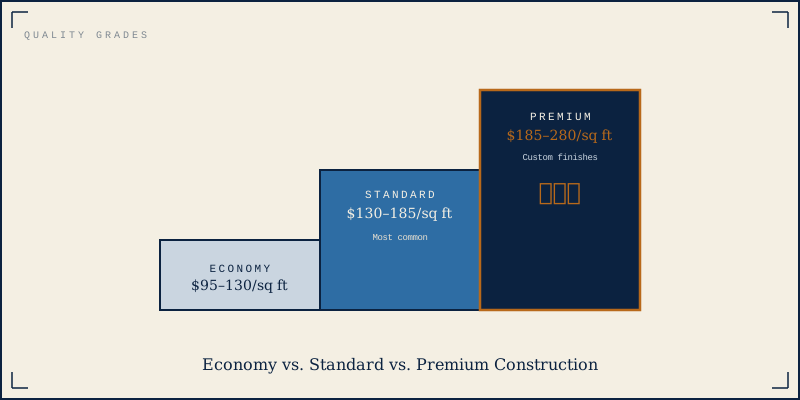
Quality grade multipliers range from 0.80× (economy) to 1.85× (luxury) in our replacement cost calculator. For a 2,000 sq ft wood-frame home in an average-cost market, that's the difference between a $297,000 economy rebuild and a $686,000 luxury rebuild: a $389,000 swing from the same footprint.
Why Quality Grade Changes Everything
Two homes. Same square footage. Same construction type. Same neighborhood. But one uses vinyl flooring throughout and laminate countertops. The other has 3/4-inch solid hardwood, custom cabinetry, Calacatta marble, and a smart home system.
These two homes cost very different amounts to rebuild. Quality grade is the multiplier that captures this difference. Getting it right is essential for an accurate replacement cost estimate, and therefore an adequate insurance coverage limit.
This guide explains what each quality grade actually means in terms of materials, finishes, and systems, so you can identify which grade applies to your home.
Economy Grade (0.80× multiplier)
Economy-grade construction is found in the lowest-cost builder homes, entry-level starter homes, and properties built primarily for rental income where finish quality was minimized.
Characteristics:
- —Vinyl sheet or LVP flooring throughout (no hardwood, no tile)
- —Laminate countertops in kitchen and bathrooms
- —Builder-grade cabinets (particleboard boxes, vinyl wrap or painted MDF faces)
- —Single-pane or basic double-pane windows
- —Builder-grade hollow-core interior doors
- —Minimal trim and molding
- —Basic light fixtures and plumbing fixtures
- —Standard-efficiency HVAC (no zoning, no smart thermostats)
- —Fiberglass bathtubs and showers
Who has economy-grade homes? Many investor-owned rental properties, homes built in the 1960s–1980s that haven't been renovated, and the most affordable end of new construction production homes.
Real cost impact: A 2,000 sq ft economy home costs approximately $297,000 to rebuild nationally before the location factor.
Standard Grade (1.00× multiplier)
Standard is the national median: what most American single-family homes deliver in terms of finish quality. If you bought a typical production home built in the 2000s or 2010s and haven't done significant renovations, you're likely standard grade.
Characteristics:
- —Mix of flooring types: carpet in bedrooms, LVP or tile in kitchen and baths
- —Quartz or solid-surface countertops in kitchen; laminate or basic tile in bathrooms
- —Semi-custom or stock cabinets with solid wood or plywood boxes
- —Standard double-pane vinyl windows
- —Six-panel solid interior doors
- —Basic but complete trim package
- —Mid-range light fixtures and plumbing fixtures (Moen, Delta mid-line)
- —Standard efficiency HVAC, single-zone
- —Fiberglass or acrylic tub/shower, one tiled shower
Real cost impact: A 2,000 sq ft standard home costs approximately $371,000 to rebuild nationally.
Good Grade (1.25× multiplier)
Good-quality construction reflects meaningful upgrades above the median. Homes in this category were built with better materials from the start, or have been substantially renovated in the last 10–15 years.
Characteristics:
- —Hardwood or high-quality LVP flooring in main living areas, tile in baths
- —Quartz countertops throughout, possibly stone in the kitchen
- —Semi-custom to custom cabinetry with solid wood boxes and soft-close hardware
- —Double-pane low-E windows with wood or fiberglass frames
- —Solid interior doors (3/4-inch hollow or solid-core)
- —Full trim package with crown molding, wainscoting in some rooms
- —Upgraded light fixtures (semi-flush LED pendants, recessed lighting throughout)
- —Better plumbing fixtures (Kohler, Moen mid-to-high, Delta Trinsic)
- —Tiled walk-in showers with glass enclosures in primary bathroom
- —Higher-efficiency HVAC, possibly two-zone
Real cost impact: A 2,000 sq ft good-quality home costs approximately $464,000 to rebuild nationally.
Excellent Grade (1.50× multiplier)
Excellent quality applies to custom and semi-custom homes built with premium materials and attention to craftsmanship. Most homes in the $800,000–$2 million market range, or thoroughly renovated older homes, fall here.
Characteristics:
- —Site-finished hardwood floors or large-format porcelain tile throughout
- —Stone countertops (natural quartzite, granite, or premium engineered stone)
- —Custom cabinetry with full-extension soft-close drawers, inset or overlay doors
- —Casement windows, triple-pane in cold climates, Andersen 400 or Pella equivalent
- —Solid-core interior doors, often 8-foot height
- —Extensive millwork: coffered ceilings, built-ins, custom shelving
- —Designer light fixtures, recessed lighting with dimming
- —Premium plumbing fixtures (Kohler Artifacts, Brizo, Grohe)
- —Large tiled walk-in showers, soaking tub, steam showers in primary bath
- —Multi-zone HVAC, possibly radiant floor heating
- —Smart home integration (lighting, locks, thermostats, security)
Real cost impact: A 2,000 sq ft excellent-quality home costs approximately $557,000 to rebuild nationally.
Luxury Grade (1.85× multiplier)
Luxury grade applies to custom high-end homes where cost was not a primary constraint. Custom architects, specialty contractors, and premium-everything specifications.
Characteristics:
- —Natural hardwood, imported stone tile, or other premium flooring
- —Marble or exotic stone countertops (slabs, not tiles)
- —Fully custom cabinetry (hand-painted, custom finishes, furniture-grade construction)
- —Aluminum-clad or solid wood windows, custom sizing, often floor-to-ceiling
- —Solid 8-foot interior doors, often custom designed
- —Intricate custom millwork, plaster moldings, hand-carved details
- —Architectural lighting design with premium fixtures (Visual Comfort, Apparatus, Baccarat)
- —Premium plumbing fixtures throughout (Waterworks, Lefroy Brooks, Samuel Heath)
- —Spa bathrooms with heated floors, multiple showerheads, freestanding tubs
- —Geothermal or variable-refrigerant-flow HVAC, full smart home integration
- —Elevator, wine cellar, home theater, or similar specialty spaces
Real cost impact: A 2,000 sq ft luxury home costs approximately $686,000 to rebuild nationally.
Side-by-Side Comparison
For a 2,000 sq ft wood-frame home, 2 stories, attached 2-car garage, national average (1.0× location):
| Grade | Multiplier | Dwelling Cost | + Garage | Total Replacement |
|---|---|---|---|---|
| Economy | 0.80× | $297,200 | $28,000 | $325,200 |
| Standard | 1.00× | $371,500 | $28,000 | $399,500 |
| Good | 1.25× | $464,400 | $28,000 | $492,400 |
| Excellent | 1.50× | $557,300 | $28,000 | $585,300 |
| Luxury | 1.85× | $686,500 | $28,000 | $714,500 |
Use our home replacement cost calculator to generate your specific estimate.
How to Identify Your Grade Honestly
The most common mistake homeowners make is selecting a grade that reflects what they like about their home rather than its actual overall quality. You might have luxury kitchen counters but standard-grade everything else. That's a Good-grade home, not Luxury.
Assess by category and average:
1. Flooring quality (4 grades: basic/standard/good/premium)
2. Cabinet and countertop quality
3. Window quality
4. Fixture quality (plumbing and lighting)
5. Door and trim quality
If most categories score standard, use Standard. If you have meaningful upgrades in 3+ categories, use Good. If you have premium finishes throughout, use Excellent or Luxury.
When in doubt, use Standard and add 10 to 15% to your final estimate as a buffer. Underestimating quality grade is one of the top causes of underinsurance, especially after renovations. Read our underinsurance risk guide to understand the stakes.
Quality grade is a judgment call, but it's one worth getting right. Run your estimate now with the grade that accurately reflects your home, then compare it to your current coverage limit and update if needed.